

If you haven’t read the first part of this article, you can reach it from here for better understanding of the subject.
In this second part of this article, I will mention about the minimal implementation of the clean architecture concept with .NET Core.
As an example, we will develop a simple API which we can use to add and list movies.
Implementation of Application Domain
First, we will create the application domain part which will be the hearth of the architecture.
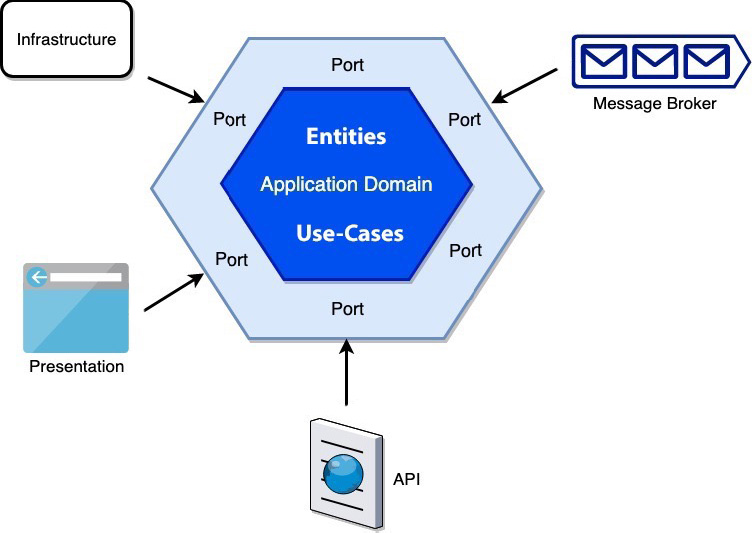
Before that, let’s recall the “Application Domain“. This layer is located in the middle of the architecture and is isolated from other frameworks, databases, UI, etc. It mainly contains domain entities, use-cases and external interfaces.
Well, first we need to create a class library called “Minimal.Core”.
dotnet new classlib -n Minimal.CoreAfter that, let’s create a folder called “Models” then define domain models as follows.
using System;

namespace Minimal.Core.Models
{
    public abstract class EntityBase
    {
        public Guid Id { get; set; }
        public DateTime CreatedAt { get; set; }
        public DateTime ModifiedAt { get; set; }
    }
}
namespace Minimal.Core.Models
{
    public class Movie : EntityBase
    {
        public string Name { get; set; }
        public double Rating { get; set; }
        public int AgeGroup { get; set; }
        public bool IsDeleted { get; set; }
    }
}
After creating the models, we need to create a folder called “Interfaces” where we will define ports. Then, let’s define an interface/port called “IRepository“.
With this port, we will be able to perform isolated database operations in the “Application Domain” layer without depending on any technologies.
using System;
using System.Collections.Generic;
using System.Linq.Expressions;
using System.Threading.Tasks;

namespace Minimal.Core.Interfaces
{
    public interface IRepository<T> : IDisposable where T : class
    {
        Task CreateAsync(T entity);
        Task<IEnumerable<T>> GetWhereAsync(Expression<Func<T, bool>> predicate);
    }
}
After defining the port, we also need to define the data transfer objects to be used between adapters.
To do this, let’s create another folder called “Dtos“. Then, in this folder, we can define “BaseResponse” and “Movie” DTOs.
using System.Collections.Generic;
using System.Linq;

namespace Minimal.Core.Dtos
{
    public class BaseResponseDto<TData>
    {
        public BaseResponseDto()
        {
            Errors = new List<string>();
        }

        public bool HasError => Errors.Any();
        public List<string> Errors { get; set; }
        public int Total { get; set; }
        public TData Data { get; set; }
    }
}
namespace Minimal.Core.Dtos
{
    public class MovieDto
    {
        public string Name { get; set; }
        public double Rating { get; set; }
        public int AgeGroup { get; set; }
    }
}
We will create request models under another folder called “Requests“. Therefore, let’s create a folder called “Requests” under the “Dtos” folder.
Minimal.Core
-Models
-Interfaces
-Dtos
--Requests
Before creating request models, first we need to include the MediatR package in the project via NuGet.
dotnet add package MediatR
With this package, we will be able to perform communication between API and Application Domain in a loosely coupled way from single point. In addition, we will also benefit from MediatR package when implementing the use-case approach.
NOTE: If you want, you can also define and implement your own use-case interfaces without using any packages.
Now, in the “Requests” folder, we can define request models which we will use for movie operations. Let’s define the “CreateMovieRequest” and “GetBestMoviesForKidsRequest” models as follows.
using MediatR;

namespace Minimal.Core.Dtos.Requests
{
    public class CreateMovieRequest : IRequest<BaseResponseDto<bool>>
    {
        public string Name { get; set; }
        public double Rating { get; set; }
    }
}
using System.Collections.Generic;
using MediatR;

namespace Minimal.Core.Dtos.Requests
{
    public class GetBestMoviesForKidsRequest : IRequest<BaseResponseDto<List<MovieDto>>>
    {

    }
}
We have created the models together with its return types by using the “IRequest” marker interface of MediatR.
Until this point, we have defined “Domain” models, “DTOs” and external interfaces, I mean “Ports“.
So, we can start to implement business use-cases. First, let’s create “Services/MovieUseCases” folders under the “Minimal.Core” project.
Minimal.Core
-Models
-Interfaces
-Dtos
--Requests
-Services
--MovieUseCases
In this folder, we will implement all movie-related use-cases.
Now, under the “MovieUseCases” folder, let’s create a class called “CreateMovieHandler” and implement the movie creation operation as follows.
using System;
using System.Threading;
using System.Threading.Tasks;
using MediatR;
using Microsoft.Extensions.Logging;
using Minimal.Core.Dtos;
using Minimal.Core.Dtos.Requests;
using Minimal.Core.Events;
using Minimal.Core.Interfaces;
using Minimal.Core.Models;

namespace Minimal.Core.Services.MovieUseCases
{
    public class CreateMovieHandler : IRequestHandler<CreateMovieRequest, BaseResponseDto<bool>>
    {
        private readonly IRepository<Movie> _repository;
        private readonly ILogger<CreateMovieHandler> _logger;
        private readonly IMediator _mediator;

        public CreateMovieHandler(IRepository<Movie> repository, ILogger<CreateMovieHandler> logger, IMediator mediator)
        {
            _repository = repository;
            _logger = logger;
            _mediator = mediator;
        }

        public async Task<BaseResponseDto<bool>> Handle(CreateMovieRequest request, CancellationToken cancellationToken)
        {
            BaseResponseDto<bool> response = new BaseResponseDto<bool>();

            try
            {
                var movie = new Movie
                {
                    Name = request.Name,
                    Rating = request.Rating,
                    IsDeleted = false,
                    CreatedAt = DateTime.Now
                };

                await _repository.CreateAsync(movie);

                response.Data = true;
            }
            catch (Exception ex)
            {
                _logger.LogError(ex, ex.Message);
                response.Errors.Add("An error occurred while creating the movie.");
            }

            return response;
        }
    }
}
Let’s take a look at what we are doing.
First of all, by implementing the “IRequestHandler” interface, we have specified that the “CreateMovieHandler” class is a use-case request handler. This handler basically handles the “CreateMovieRequest” model and returns a response model type of “BaseResponseDto“.
We implemented the business use-case as dummy in the “Handle” method. The important point here is the usage style of the “IRepository” interface.
If we look at the above code block, we can see the “IRepository” interface is located in the “Minimal.Core.Interfaces” namespace and not in any other layer/adapter. I mean, we are using the external port that we defined in the “Minimal.Core” project.
This means the “CreateMovieHandler” use-case will not be affected by any technology changes.
Now let’s implement the use-case, which will return the best movies for children. To do that, let’s create another class called “GetBestMoviesForKidsHandler” and implement it as follows.
using System;
using System.Collections.Generic;
using System.Linq;
using System.Threading;
using System.Threading.Tasks;
using MediatR;
using Microsoft.Extensions.Logging;
using Minimal.Core.Dtos;
using Minimal.Core.Dtos.Requests;
using Minimal.Core.Interfaces;
using Minimal.Core.Models;

namespace Minimal.Core.Services.MovieUseCases
{
    public class GetBestMoviesForKidsHandler : IRequestHandler<GetBestMoviesForKidsRequest, BaseResponseDto<List<MovieDto>>>
    {
        private readonly IRepository<Movie> _repository;
        private readonly ILogger<GetBestMoviesForKidsHandler> _logger;

        public GetBestMoviesForKidsHandler(IRepository<Movie> repository, ILogger<GetBestMoviesForKidsHandler> logger)
        {
            _repository = repository;
            _logger = logger;
        }

        public async Task<BaseResponseDto<List<MovieDto>>> Handle(GetBestMoviesForKidsRequest request, CancellationToken cancellationToken)
        {
            BaseResponseDto<List<MovieDto>> response = new BaseResponseDto<List<MovieDto>>();

            try
            {
                List<MovieDto> movies = (await _repository.GetWhereAsync(m => m.AgeGroup <= 16)).Select(m => new MovieDto
                {
                    Name = m.Name,
                    Rating = m.Rating,
                    AgeGroup = m.AgeGroup
                }).ToList();

                response.Data = movies;
            }
            catch (Exception ex)
            {
                _logger.LogError(ex, ex.Message);
                response.Errors.Add("An error occurred while getting movies.");
            }

            return response;
        }
    }
}
In this use-case, we have coded a logic which simply returns movies that are best for children. According to our example, the application domain layer is now ready.
Now let’s pass to the infrastructure section where we will perform database operations.
Implementation of Infrastructure
First, let’s create a class library called “Minimal.Infrastructure“.
dotnet new classlib -n Minimal.Infrastructure
After that, we need to add “Minimal.Core” project as reference.
Since we will use EntityFrameworkCore as ORM, we need to add also “Microsoft.EntityFrameworkCore” package to the project via NuGet.
If we remember in the “Minimal.Core” project, we had defined a port called “IRepository” to reverse the dependency flow. In the infrastructure, we will implement this port.
First we need a DbContext. To do that, let’s define a class called “AppDbContext” and code as follows.
using Microsoft.EntityFrameworkCore;
using Minimal.Core.Models;

namespace Minimal.Infrastructure
{
    public class AppDbContext : DbContext
    {
        public AppDbContext(DbContextOptions<AppDbContext> options) : base(options)
        { }

        public DbSet<Movie> Movies { get; set; }

        protected override void OnModelCreating(ModelBuilder builder)
        {
            base.OnModelCreating(builder);

            //...
        }
    }
}
Now we can implement the repository class.
To do this, we need to create a folder called “Repositories” and then implement the “Repository” class in this folder as follows.
using System;
using System.Collections.Generic;
using System.Linq;
using System.Linq.Expressions;
using System.Threading.Tasks;
using Microsoft.EntityFrameworkCore;
using Minimal.Core.Interfaces;
using Minimal.Core.Models;

namespace Minimal.Infrastructure.Repositories
{
    public class Repository<T> : IRepository<T> where T : EntityBase
    {
        private readonly AppDbContext _context;
        private DbSet<T> _dbSet;

        public Repository(AppDbContext context)
        {
            _context = context;
            _dbSet = context.Set<T>();
        }

        public async Task CreateAsync(T entity)
        {
            _dbSet.Add(entity);

            await _context.SaveChangesAsync();
        }

        public async Task<IEnumerable<T>> GetWhereAsync(Expression<Func<T, bool>> predicate)
        {
            return await _dbSet.Where(predicate).ToListAsync();
        }

        private bool _disposed = false;
        protected virtual void Dispose(bool disposing)
        {
            if (!_disposed)
            {
                if (disposing)
                {
                    _context.Dispose();
                }
            }
            _disposed = true;
        }

        public void Dispose()
        {
            Dispose(true);
            GC.SuppressFinalize(this);
        }
    }
}
At the above code block, we have implemented a simple generic repository by using the db context which we created. Thus, we have completed the implementation of the “Infrastructure” adapter.
Lastly, we need a communication adapter/API.
Implementation of API
If we look from the architecture point of view, we can see the implementation operation of the API is not different from the implementation of other adapters. If we recall, we had said that we can think for hexagonal architecture as plug-in-based structure, which locates the core layer in the middle of the architecture, which we can plug an adapter, or out.
For implementation, first, let’s create an ASP.NET Core Empty Web project.
dotnet new web -n Minimal.API
Then, let’s add application domain layer and infrastructure adapter as reference.
dotnet add reference ../Minimal.Core/Minimal.Core.csproj
dotnet add reference ../Minimal.Infrastructure/Minimal.Infrastructure.csproj
We had benefited from the MediatR library while implementing business use-cases in the application domain. With this approach, we had mentioned that we can perform the communication between API and application domain in a loosely coupled way from single point.
To do this, we have to include “MediatR” and “MediatR.Extensions.Microsoft.DependencyInjection” packages in the API project via NuGet.
dotnet add package MediatR
dotnet add package MediatR.Extensions.Microsoft.DependencyInjection
Now we are ready for implementation.
Now let’s create an API controller class called “MoviesController” under the “Controllers” folder and then code as follows.
using System.Collections.Generic;
using System.Threading.Tasks;
using MediatR;
using Microsoft.AspNetCore.Mvc;
using Minimal.Core.Dtos;
using Minimal.Core.Dtos.Requests;

namespace Minimal.API.Controllers
{
    [Route("api/[controller]")]
    [ApiController]
    public class MoviesController : ControllerBase
    {
        private readonly IMediator _mediator;

        public MoviesController(IMediator mediator)
        {
            _mediator = mediator;
        }

        [HttpPost]
        public async Task<ActionResult<string>> CreateMovieAsync([FromBody]CreateMovieRequest createMovieRequest)
        {
            BaseResponseDto<bool> createResponse = await _mediator.Send(createMovieRequest);

            if (createResponse.Data)
            {
                return Created("...", null);
            }
            else
            {
                return BadRequest(createResponse.Errors);
            }
        }

        [HttpGet("kids")]
        public async Task<ActionResult<List<MovieDto>>> GetBestMoviesForKidsAsync()
        {
            BaseResponseDto<List<MovieDto>> getBestMoviesForKidsReponse = await _mediator.Send(new GetBestMoviesForKidsRequest());

            if (!getBestMoviesForKidsReponse.HasError)
            {
                return Ok(getBestMoviesForKidsReponse.Data);
            }
            else
            {
                return BadRequest(getBestMoviesForKidsReponse.Errors);
            }
        }
    }
}
In the above code block, we have implemented the “CreateMovieAsync” method, which we will use to create a movie, and the “GetBestMoviesForKidsAsync” method, which we will use to get best movies for children.
In the methods, we have set only the relevant request models, which we want it to handle, as parameters to the mediator as follows.
await _mediator.Send(createMovieRequest);
await _mediator.Send(new GetBestMoviesForKidsRequest());
Mediator will find the relevant request handlers for us and execute the request models. Performing these operations from single point is good approach, right?

Now let’s perform the injection operations in the “Startup” class.
using MediatR;
using Microsoft.AspNetCore.Builder;
using Microsoft.AspNetCore.Hosting;
using Microsoft.AspNetCore.Mvc;
using Microsoft.EntityFrameworkCore;
using Microsoft.Extensions.Configuration;
using Microsoft.Extensions.DependencyInjection;
using Minimal.Core.Interfaces;
using Minimal.Core.Services.MovieUseCases;
using Minimal.Infrastructure;
using Minimal.Infrastructure.Repositories;

namespace Minimal.API
{
    public class Startup
    {
        public Startup(IConfiguration configuration)
        {
            Configuration = configuration;
        }

        public IConfiguration Configuration { get; }

        // This method gets called by the runtime. Use this method to add services to the container.
        public void ConfigureServices(IServiceCollection services)
        {
            services.AddMvc().SetCompatibilityVersion(CompatibilityVersion.Version_2_2);

            //Infrastructure
            services.AddDbContext<AppDbContext>(opt => opt.UseInMemoryDatabase("TestDB"));
            services.AddScoped(typeof(IRepository<>), typeof(Repository<>));

            //Services
            services.AddMediatR(typeof(CreateMovieHandler));
        }

        // This method gets called by the runtime. Use this method to configure the HTTP request pipeline.
        public void Configure(IApplicationBuilder app, IHostingEnvironment env)
        {
            if (env.IsDevelopment())
            {
                app.UseDeveloperExceptionPage();
            }
            else
            {
                // The default HSTS value is 30 days. You may want to change this for production scenarios, see https://aka.ms/aspnetcore-hsts.
                app.UseHsts();
            }

            app.UseMvc();
        }
    }
}
In the “Startup” class, we specified that we will use an in-memory database for testing purpose. Then we performed the injection operations of the “IRepository” interface and MeaditR library.
Now, this adapter is also ready.
Thus, we can say that we completed the implementation operation of this example project with clean architecture.
Conclusion
Especially if we have got used to a dependency flow from top to bottom, it may seem a bit strange to define the ports (I mean, interfaces) in the application domain, and then implement their adapters around the architecture. After getting used to this architecture, we can see how this approach gives us speed and flexibility in the face of future changes/new features, testability and maintenance.
For example, let’s assume we decided to use a NoSQL technology as the database. All we need to do is create an adapter that implements the “IRepository” port, and then perform the necessary injection operations.
Because, by nature of the architecture we are building an inner/core layer with no dependencies on the outside world.

We equip the around of the core layer with replaceable adapters.
https://github.com/GokGokalp/CleanArchitectureBoilerplates/tree/master/src/MinimalCleanArchitecture
17 Comments
eren arslanDecember 24, 2019
merhaba bir kaç sorum olacaktı. Maddeler halinde sormak istiyorum.
1) Kendi projelerimde onion mimari kullanıyorum. Ve Monolitic yapıları oluyor. Clear architecture daha profesyonel duruyor bence ama her bir service in en az 6-7 methodu clean de ki karşılığı handler ı olucağı için startup dosyasında 6-7 service karşılığında 50-60 tane handler DI etmemiz gerekicek. Bu normal mi ?
2) events dosyasının açıklamasını yapmamışsınız sanırım burada kafam karıştı. Event Driven ve Message Driven diye 2 konudan söz ediliyor. RabbitMQ ya event kısmında mı mesaj yollayacağız ? Bunun için mi oluşturdunuz burayı.
3)Microservices bi kaç aydır baya dikkatimi çekiyor ama her servisin kendi DB si olması kafamı karıştırdı. Joinler nasıl yapılacak ? Veya buna çözümü nedir ? Clear architexture sadece micro services için uygun gibi yoksa 6-7 service deki okadar çok handlerı DI yapmak doğru olmaz sanırım.
4)Mesela Makale post edicez ve içinde image upload kısmıda olucak. Kullanıcının makalesini veri tabanına ekledik ama image cdn e atmak ve beklememek için rabbitmq kullanıcam UI da Facebook da vs resimlerin yüklenmesini bekliyor bizim seneryoda beklemiyor . UI tarafında nasıl bir seneryo uygulamalı?
MuratDecember 24, 2019
Interface’leri Core projeye koyup Core’u komple diğer projelere referans olarak eklemek yerine, Interface’leri bir proje içine koyup hem Core’a hem de diğer projelere referans olarak eklemek daha iyi olmaz mı?
MuratDecember 24, 2019
Bir de burada neden Mediator pattern’e ihtiyaç duyuyoruz. “Bu paket sayesinde API ile Application Domain arasındaki iletişimi, loosely coupled olarak tek bir noktadan gerçekleştirebileceğiz.” demişsiniz. Ancak zaten iletişimimiz interface’ler üzerinden kurarsak, Loosely coupled zaten sağlamış olmuyor muyuz?
HüseyinDecember 24, 2019
Merhaba,
Bir konuda mimari olarak fikrinizi almak isterim. Bu konuyla ilgi genel bir konsept var mı ondan da emin değilim :) Mesala bir uygulama geliştirdiniz, yukarıda bahsettiğiniz gibi temiz bir şekilde dört dörtlük, generic ve birden fazla müşteride ortak özellikleriyle beraber kullanılabilecek bir self-service/portal uygulaması hazırladınız. Tabi ki müşteriler bir süre sonra sizden özel istekler isteyecek(benim temamda buralar şu renk olsun, margin-padding böyle olsun, inputlar böyle olsun, ek olarak şuraya da log atsın, SSO olsun vs) ve bunu ana projeye müşteri özelinde eklemek çok kötü bir development süreci ortaya getirecektir (if ekleyerek, areas ekleyerek vs burada bir çok kötü çözüm var :) ). Bunun yerine ana uygulamamızı master branch üzerinde tutarak, müşteri özelinde özel istekleri olan projeler için master->customer yeni bir branch açıp, bu yeni branchi, o müşteri özelinde master gibi kullanarak projeye devam etmek sizce mantıklı mı? Bu kalıp ile ilerlendiğinde, bir bug keşfedildiğinde master branch üzerinde fix edilip customer brachler üzerinde pull request ile tek tek update işlemleri yapılabilir ve özelleştirmeler müşteri bazında ayrılabilir durumda oluyor.
Burada da şöyle bir sorun var, 3, 5 müşteri için bu süreç yavaşta olsa yürütülebilir ikin 50 müşteri olduğunda 50 tane branch açıp manuel ilerlemek süreci çok zorlaştıracaktır. Bu durum ile ilgili örnek bir yaklaşım bir mimari var mıdır?
Temelde varmak istediğim nokta müşteri branchlerini otomatize bir şekilde master üzerinden güncel tutabilmek.
MehmetDecember 24, 2019
Merhaba, öncelikle elinize sağlık, çok net ve anlaşılır bir mimari olmuş. Bir sorum olacak.
Infrastructure katmanında Repository ile EF i Core’dan soyutlamışsınız. Include gibi özel ihtiyaçlarımız olduğunda Repository’e Include() gibi yeni metotlar mı eklemeliyiz?
Yada bunun yerine Infrastructure katmanında Repository ‘i kaldırıp entity bazlı olacak şekilde bir klasörde sorguları ayrı ayrımı oluşturup Core’a dönmeliyiz, siz ne yapardınız? Selamlar
Berkay Doğukan UrhanDecember 24, 2019
Merhaba
Bu mimariyi yeni öğrenmeye çalışıyorum da anlamadığım bir nokta var. Mesela yeni bir sistem eklenecek diyelim yeni bir class libraryi kurup onun içinde mi geliştirme yapmam lazım yoksa infrastructure içindemi geliştirmem yapmam lazım yol gösterebilir misiniz?
YavuzDecember 24, 2019
Merhaba
Öncelikle emeğinize sağlık çok açık ve anlaşılır makaleler kaleme almışsınız. Genelde bu konuyla ilgili örnekler yapılırken basit bir veri çekme ya da kaydetme işlemleri anlatılıyor. Fakat karmaşık bir probleminiz olduğunda ne yapmamız gerekir. Şöyle ki; mediatr ile aldığımız nesneyi handlera aldık bununla beraber birden fazla hatta üç beş farklı veritabanı işlemi yapıp gelen veriden birden fazla tablodan birbirine bağlı verileri çekip aynı anda farklı insertleri aynı logic içerisinde yapmamız gereken durumlar olabiliyor. Böyle bir durumda tek bir handler içerisine tüm farklı veritabanı işlemlerini ve hesaplama işlemlerini mi yapmamız gerekiyor bu sefer handler çok fazla karmaşık hale gelecektir ya da nasıl bir yaklaşım izlemeliyiz?
Teşekkürler
aliDecember 24, 2019
use case nerde? unit testler? ports, adaptors? 2 yazinda klasik mediatr yaklasimi gostermissin. alakasiz olmus biraz.